
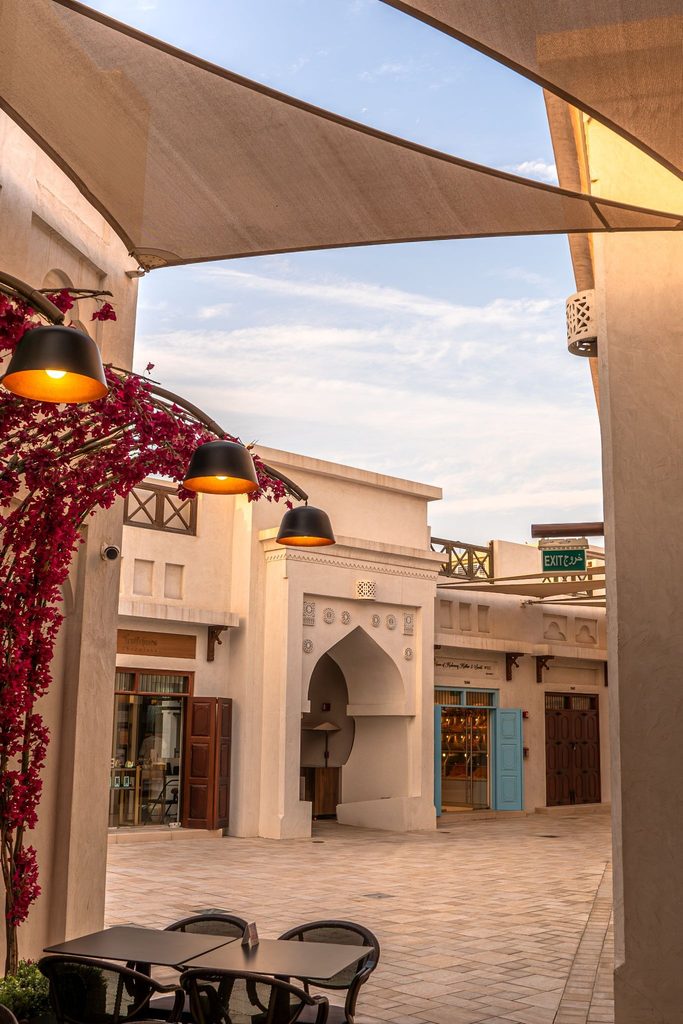
From the moment you step into Souq Al Baraha, you feel a sort of immediate familiarity and connection to the place. It’s not because it’s replicating old buildings, but because so many of its details are inspired by Bahrain’s cultural heritage, and by a way of life where homes, shops, alleyways and gathering spaces are all naturally connected.
From the broad gateways and winding passages, to the wooden doors and arches and open courtyards, all the architectural elements at Souq Al Baraha serve as a reflection of traditional Bahraini neighbourhoods and communities, especially those of old Muharraq, known for its closely built homes and narrow alleys weaving between them.
Alleyways and Passages Inspired by the Old Fareej
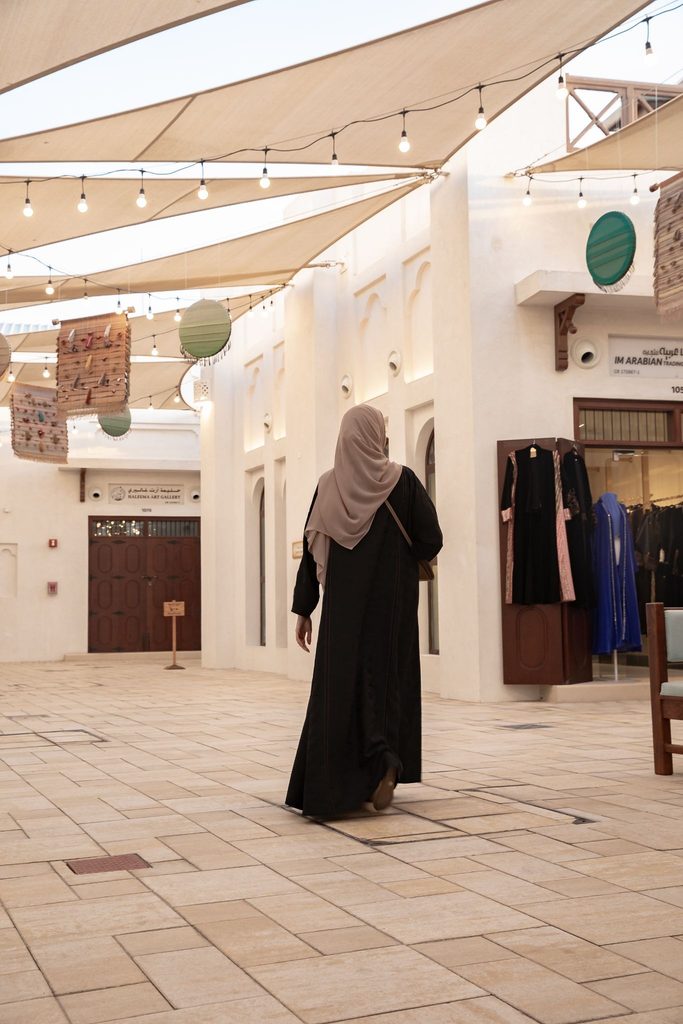
One of the most distinctive features of Souq Al Baraha is the way its pathways are designed. Rather than lining every shop along one conventional retail corridor, the souq opens into smaller alleyways, courtyards and different entrances, encouraging visitors to walk around and discover the space gradually.
It brings to mind the layout of Bahrain’s old furjan (neighbourhoods), where narrow sikkas (alleyways) connected homes with local shops, mosques and neighbourhood squares. These pathways were not simply a way to get from one place to another; they were part of everyday community life.
Even the shaded walkways and the changing light between open and covered areas give walking through Souq Al Baraha the character of a traditional souq rather than a typical modern shopping centre.
Doors and Arches That Give the Souq Its Character
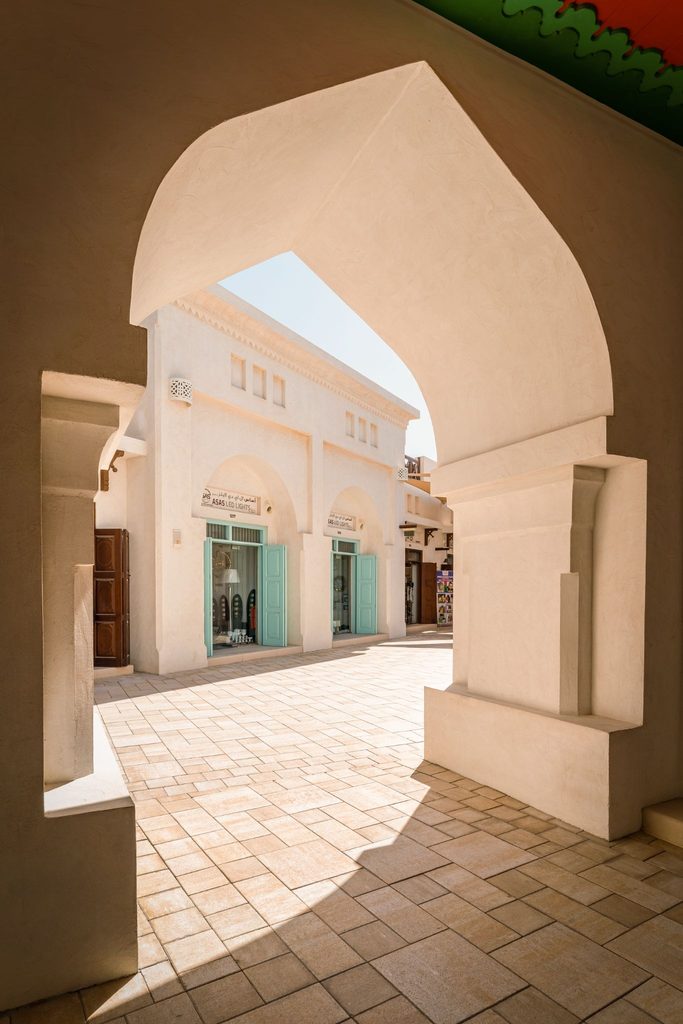
Large wooden doors appear throughout the souq, alongside others painted in shades of blue and turquoise. Combined with the arches and geometric details framing many of the entrances, the shopfronts become an important part of the experience themselves.
The colour palette remains simple and warm, built around white walls, natural wood and earthy tones, with touches of colour appearing through the doors, ceilings and decorative details. Together, they create a space that feels rooted in heritage without feeling dated.
The same character can be found in the smaller details: decorative wall features, geometric openings, wooden screens, shaded structures and ceilings with exposed beams and colours inspired by traditional homes from around the Gulf.
Courtyards Made for Gathering
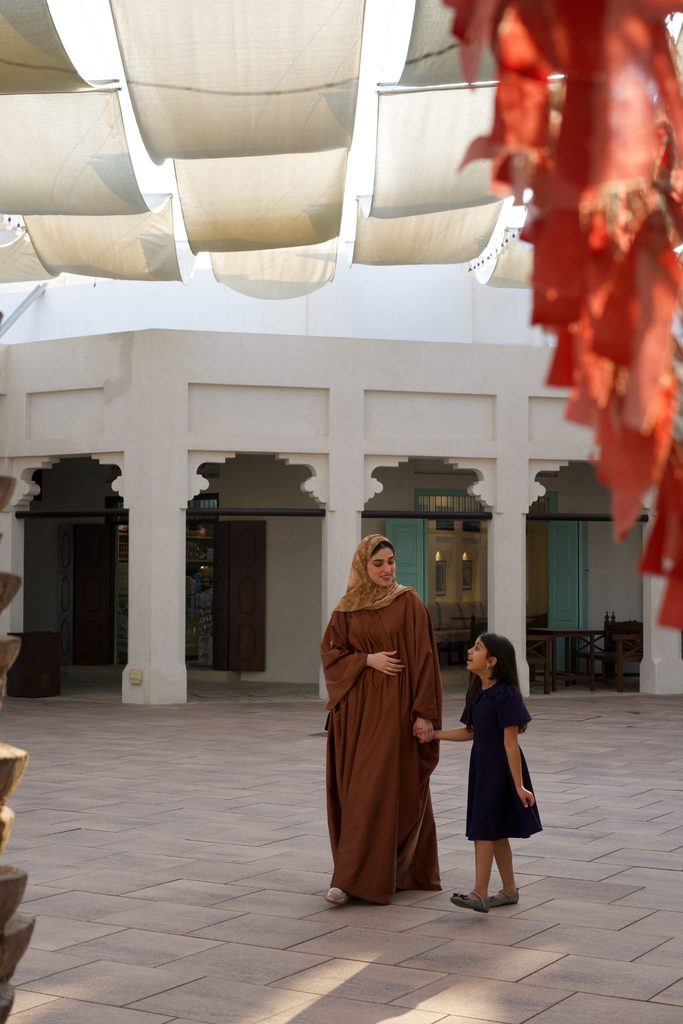
In traditional Bahraini homes and neighbourhoods, the courtyard or baraha was never simply an empty space. It was somewhere to sit, meet, talk and be part of everyday life.
That same idea runs through Souq Al Baraha. Open squares, palm trees, seating areas and intersecting pathways create natural places for people to gather. Traditional-style majlis seating adds another social layer, making the souq somewhere to spend time, not simply somewhere to shop.
Another defining feature is the mosque minaret rising between the buildings. Its presence adds to the familiar neighbourhood character of the souq, recalling a time when the mosque sat naturally at the heart of the Bahraini fareej and its daily rhythm.
A Modern Souq with a Bahraini Memory
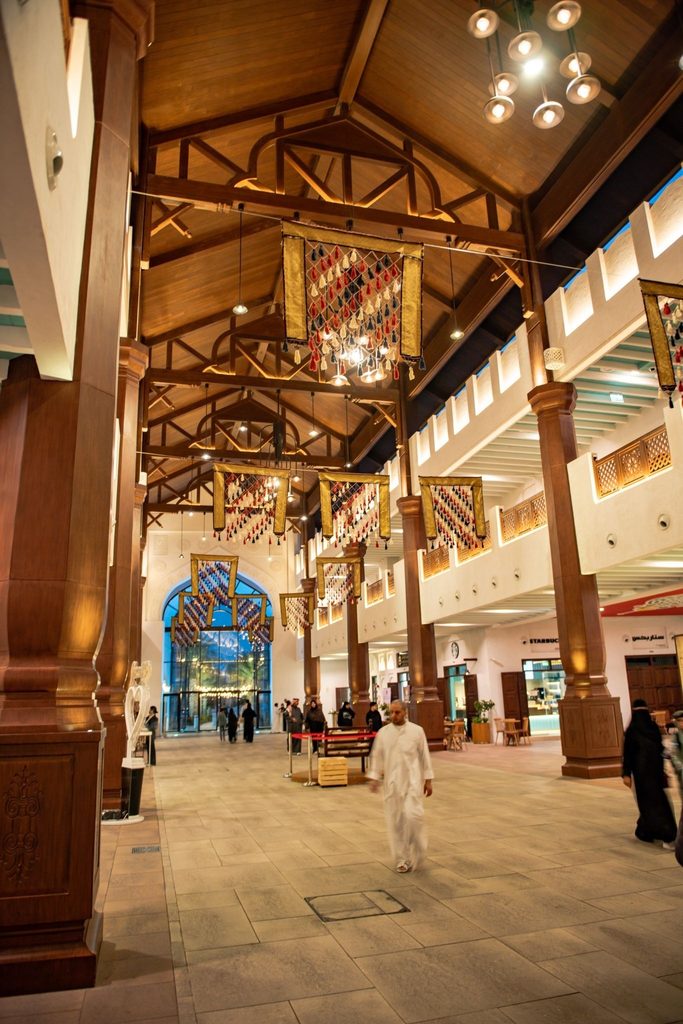
What makes Souq Al Baraha special is that its heritage character goes beyond the façades. The arrangement of its shops, courtyards, alleyways, seating areas and open doorways all come together to create the feeling of an old souq, reimagined for the way people visit, shop and spend time today.
Even the pathways carry names inspired by Bahrain’s heritage and local memory, including Darb Al Loomi, Darb Al Razji, Darb Al Ward and Darb Al Mashmoom, bringing a little more Bahraini identity into every step through the market.
Perhaps that is why Souq Al Baraha feels distinctly Bahraini from the very first visit. Its identity is not built around decoration alone, but around details drawn from the architecture, memories and everyday life of the country.
Almost everywhere you look, there is a reminder that Bahraini architecture is not simply something from the past to preserve. It is a living character that can be experienced again in a way that belongs to the present, through the names, pathways, spaces and everyday moments found throughout Souq Al Baraha.